mobile home
Mobile Home Maintenance: Everything You Need to Know
Everything you need to know about mobile home maintenance, from skirting and crawlspace vents to alarms, moisture, and official HUD installation notes.
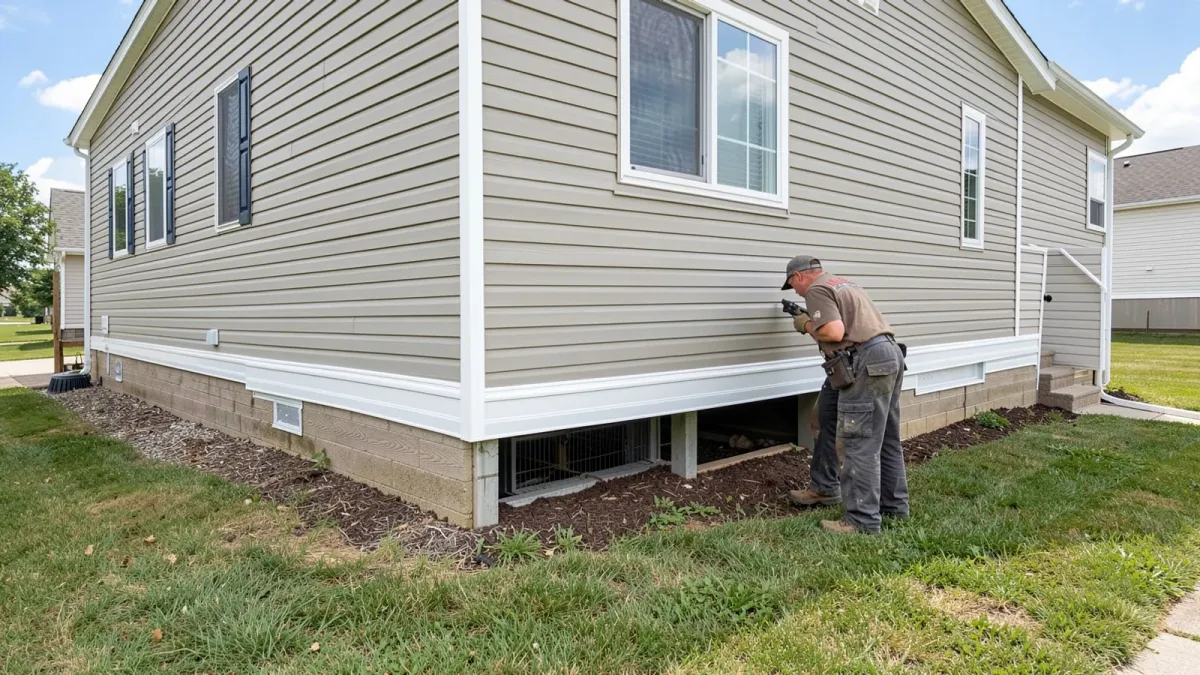
A manufactured home has the same needs, plus a few of its own
Mobile home maintenance is ordinary home maintenance, with extra attention to the space under the house, the way the home meets the ground, and the paths moisture and exhaust take to the outside. Many people say "mobile home" when they mean a manufactured home built to the federal HUD code. The habits in this article are for that kind of house: a home that usually sits on a support system, often with skirting, and that still needs clean filters, working alarms, and a careful eye for water.
In our family, the jobs that made the biggest difference were not dramatic. We started walking the skirt after windy days, looking for a loose panel or a vent that had been pushed shut. We started vacuuming the dryer path and making sure it actually ended outdoors, not in the crawlspace. We started treating musty smells as a moisture puzzle, not as a reason to add perfume.
This is not a substitute for the manufacturer's manuals, for HUD installation standards, or for a licensed installer when the work is structural. If the home has shifted, if supports look wrong, or if you need to go under the home and you are not sure it is stable, get qualified help.
A maintenance map for a manufactured home
Start with the jobs that keep air, water, and exhaust where they belong.
| Area | What to look at | Why it matters | Who usually does it |
|---|---|---|---|
| Skirting | Panels that are intact, weather-resistant, and not holding water against the siding or the ground | HUD's model installation standards ask for skirting that is weather-resistant, that does not trap water, and that does not stop the siding from expanding | A careful homeowner for a loose panel; a professional if the skirt or the drainage is a larger problem |
| Under-floor ventilation | Openings that are still open, screened, and not blocked by storage or by a closed winter "improvement" | The same HUD installation standards describe ventilation openings for a skirting enclosure, including a general figure of 1 square foot of opening per 150 square feet of floor, or 1 per 1,500 if a 6-mil vapor retarder is installed, with openings on opposite sides and rodent-resistant covers | A look you can do from the outside; a professional if you need to add or resize vents |
| Vents through the skirt | Dryer, furnace, water-heater, and other exhaust or intake paths that must reach outdoor air | HUD installation standards require certain dryer and combustion-air vents to pass through the skirting to the outside; a blocked or indoor-dumping vent is a moisture and a carbon monoxide problem | You can look; a qualified technician should correct fuel-burning equipment |
| Moisture | Soft floors, staining, standing water near the pad, musty air after rain | HUD has long published plain-language help on moisture problems in manufactured homes; water under or in the house is not a cosmetic issue | You notice; a professional may need to correct grading, plumbing, or leaks |
| Alarms and filters | Smoke and carbon monoxide alarms, HVAC filters, a clear path around equipment | The same EPA and Energy Department habits that apply to other homes still apply here | Usually the household, plus a technician for fuel-burning appliances |
| Hitch, axles, and towing gear, if still present | Whether those parts are meant to remain, and whether they are rusted, in the way, or leaking remnants of a move | Some homes retain towing equipment after siting; others do not. Do not improvise a move | A licensed mover or installer, not a weekend experiment |
The ventilation and skirting details above come from HUD's model manufactured home installation standards in 24 CFR Part 3285, including the skirting discussion around 24 CFR 3285.505. Installation of a new or relocated home is a professional, permitted job. Everyday looking is yours.
For indoor air and carbon monoxide, use the same official habits as in any house: test alarms, keep fuel-burning equipment maintained, and never run a generator inside or in an enclosed carport. EPA's winter indoor-air guidance is a useful seasonal reread, including the point about keeping vents clear of snow. Energy.gov's home energy checklist still applies to filters, water-heater settings, and sealing leaks you can actually reach.
A practical maintenance checklist
- You can walk the skirt and see whether panels are loose, missing, or holding water
- Under-floor vents are open, screened, and not stuffed with insulation or storage "to keep the heat in"
- The dryer exhaust reaches outdoor air, and lint is not filling the path
- Furnace or water-heater exhaust and intake, if they use the crawlspace path, are intact and clear
- There is no standing water against the pad or the skirting after a rain
- Smoke and carbon monoxide alarms work, and you know where they are
- Filters are the right size and are changed or cleaned on a rhythm you can remember
- Soft floors, staining, or a new musty smell have a written date and a next step, not a rug over the top
- You have the manufacturer's manuals, or you know where to get them, before you cut or alter anything
- Work on supports, tie-downs, gas lines, or moving the home is in professional hands
A closed crawlspace with no planned ventilation, packed with boxes, is a common well-meant mistake. Air and moisture still need a designed path.
Everyday habits that keep a manufactured home kinder to live in
Keep heavy storage off damp floors. Keep plant beds and soil from piling against the skirting in a way that traps water. In winter, clear snow from the vents you can safely reach, and do not decide to "seal everything" without looking at what the installation required for combustion air and moisture.
Inside, wipe condensation, use bathroom and kitchen fans that actually exhaust outdoors, and treat a new soft spot as urgent. Moisture publications from HUD are clear that small water problems become large floor problems if they sit.
If you rent a manufactured home or a lot, put the division of jobs in writing: who clears snow around vents, who calls for a gas-appliance service, who repairs skirting. Official standards still describe how the home should have been installed. The lease describes who pays to keep it that way.
Questions about mobile home maintenance
How is mobile home maintenance different from maintaining a site-built house?
You still have filters, alarms, gutters or roof edges, and plumbing. You also have skirting, under-floor ventilation, and exhaust paths that often travel through that under-floor space. Moisture under the home deserves a closer look than it sometimes gets.
Can I close the crawlspace vents in winter to save heat?
Do not improvise a seal that blocks required ventilation or combustion air. If winter closures are part of a designed system, that should come from the installation design or a qualified professional, not from a cold afternoon and a roll of plastic. Blocked vents can make moisture and exhaust problems worse.
How often should I look at the skirting?
After storms, after the thaw, and as part of a seasonal walk. You are looking for loose panels, animal damage, standing water, and vents that have been pushed shut. A monthly glance costs little and catches problems while they are still a panel, not a wet floor.
Where do I find official rules, not just forum advice, for a manufactured home?
HUD's manufactured housing program and the installation standards in 24 CFR Part 3285 are the federal starting point, along with your state or local installer and building authority. For indoor air and carbon monoxide, use EPA and, for energy habits, the Department of Energy. Keep the home's own manuals with those official pages.