decluttering
Decluttering a House: A Practical Guide
A practical guide to decluttering a house, with a room-by-room checklist and official EPA notes on reuse, recycling, and household hazardous waste disposal.
You do not have to finish the house this weekend
Decluttering a house goes better when you treat it as a series of small, finished decisions, not as a personality renovation. A single closet that ends the day clearer is a success. A Saturday in which every room is emptied onto the floor is how people get discouraged and then live with the piles for a month.
Start with a room, or a zone in a room, that you use every day. The hallway table, the kitchen counter, the chair that has become a wardrobe — those are good first places, because you will see the result tomorrow morning. The attic can wait until you have a method.
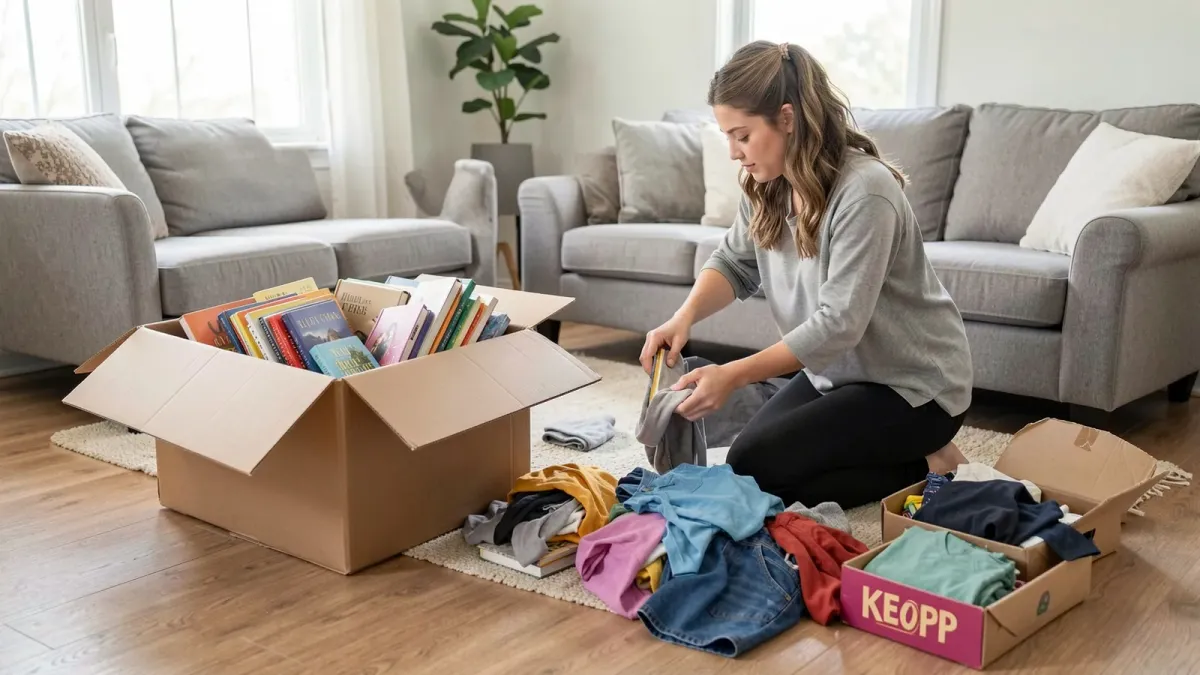
This is a practical household guide, including a house decluttering checklist, not a promise that a particular method is the only one that works. You do not need a trademarked system. You need a bag for trash, a box for donations, a box for items that belong in another room, and a rule about how long a “maybe” pile is allowed to exist.
When you throw things away or give them away, do it in a way that does not create a new problem for someone else. The U.S. Environmental Protection Agency’s pages on recycling and reducing waste and on household hazardous waste are the official place to start for paint, pesticides, batteries, oils, and similar leftovers. Those do not go in the everyday trash or down the drain just because you are having a tidy weekend.
A method that fits a normal week
Work in timed sessions. Forty-five minutes plus a ten-minute reset is enough. Set a timer so you stop, even if you are tempted to “just do the next drawer.” Tired decisions are how heirlooms go in the donation bag by accident, and how junk stays because you cannot face one more choice.
For each object, use a short set of questions, and answer them honestly:
- Do we use this, or is it a leftover from a life we do not live anymore?
- If it is useful, is this the place it should live?
- If we are keeping it for someone else, have they actually agreed to take it, and by when?
- If it is broken, do we have a real plan and a date to fix it?
- If it is leftover product — paint, cleaner, oil, pesticides — does it need a hazardous-waste drop-off rather than the bin?
Move items to the correct box immediately. Walking around the house with a single object, looking for a new home, is how a session unravels. The “belongs elsewhere” box gets walked once, at the end.
A “maybe” box is allowed if it has a date on it. Thirty days is plenty for ordinary things. If you do not miss the contents, they can go. Photographs, legal papers, and genuinely meaningful objects should not be forced through a thirty-day test in a first session. Put those in a clearly labeled bin and deal with them when you are not also holding a broken lamp.
Tips on decluttering your house that actually help are usually boring: work with one category or one shelf at a time, keep a bag in the car for the donation center, and do not buy new organizers until the volume is down. A second set of storage cubes is not a decluttering method. It is a way to keep the same objects in a nicer box.
Room by room, without turning it into a television show
Entry and living room. These rooms collect other people’s houses: mail, bags, toys, returns you have not returned. Give each person a hook or a bin if you can, and be ruthless with the mail. Recycle the paper you do not need; file the few sheets you do. If an item has been on the floor for a week, it does not have a home.
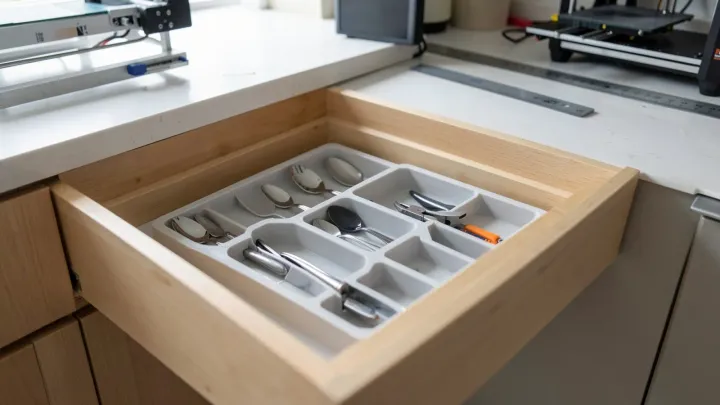
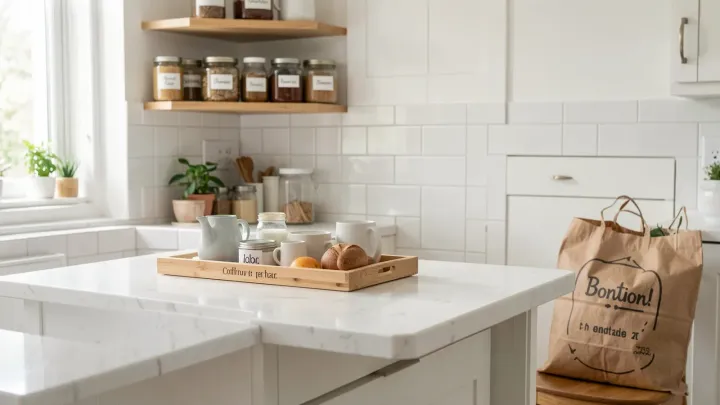
Kitchen. Keep the tools you use on the busiest shelf. Duplicate spatulas, cracked plastic, and mystery containers without lids are easy wins. Food is not “clutter” if you will eat it, and it is not a donation if it is open or expired; use it, compost it if you can, or dispose of it according to local rules. Do not pour grease or chemicals down the sink as a tidying shortcut.
Bedrooms and closets. Clothes fit, or they will be altered, or they go. A “someday size” pile that has not moved in a year is a decision you are postponing. Keep one sentimental item if you need to, not a museum of unused versions. Linens: enough for the beds you have, plus a spare set, is plenty for most houses.
Bathrooms. Leftover medicines and many personal-care chemicals are not ordinary trash. Follow local guidance for medicine take-back, and use household hazardous waste rules for products the EPA would treat as HHW. Do not flush leftovers just to empty a cabinet.
Kids’ rooms. Work with the child when you can, in short sessions, and keep a few boxes for truly outgrown toys you plan to give away. Hidden trash bags at midnight will buy you peace today and an argument tomorrow, unless the objects are broken or unsafe.
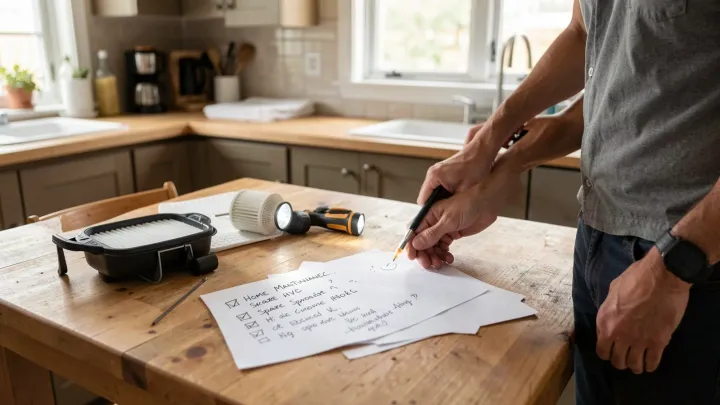
Garage, basement, and attic. These rooms are where unfinished projects go to become humidity. Open one shelf at a time. Chemicals, paints, pesticides, solvents, batteries, and oils go to a household hazardous waste collection, not to a regular bin, as the EPA’s HHW guidance explains. Used electronics often have a separate recycling path; check local official instructions rather than leaving a nest of cables “for now.”
A house decluttering checklist
| Zone | First, take out | Then decide | How it leaves the house |
|---|---|---|---|
| Entry and living areas | Trash and recycling, returns, items that belong in other rooms | Keep only what has a home in this room | Recycling, a donation box in the car, a one-time walk of the “elsewhere” box |
| Kitchen | Broken tools, lidless containers, expired food | Daily tools at hand; rarely used tools in a high or far cupboard | Food waste via local rules; no chemicals down the drain |
| Closets | Clothes that do not fit and will not be altered, worn-out underlayers | A set of clothes you can actually dress from | Clean donations; rags or textile recycling if your town has it |
| Bathrooms | Empty bottles, expired products | A small, used set, not a stash “just in case” you never open | Medicine take-back and HHW rules for the rest |
| Children’s spaces | Broken toys, pieces that cannot be completed, outgrown gear | A defined amount of storage, not an expanding pile | Donations the child helped choose, when possible |
| Garage and basement | Hazardous leftovers, dead electronics, projects with no date | One shelf empty at the end of the session | Official HHW and e-waste drop-off; a scheduled donation run |
Best decluttering tips are the ones you will repeat. A weekly fifteen-minute reset of the entry and the kitchen will do more than an annual purge you dread. If you share the house, agree on the donation box and the rules before you start; surprise disappearances of other people’s things are not tidying.
Questions people ask when the house feels like too much
How long should decluttering a house take?
As long as it takes to make lasting decisions, which is usually many short sessions, not one heroic weekend. A small house can still hold twenty years of objects. Give yourself a room at a time, and protect a little energy at the end of each session for the bags to actually leave.
What should I do with paint, cleaners, and batteries?
Do not put household hazardous waste in the everyday trash or pour it down a drain. Use the EPA’s HHW page and your local official collection program. If a product can still be used, keep it in its original labeled container, or give it only to someone who can use it safely.
Should I buy organizers first?
No. Reduce the volume first, then buy the smallest set of shelves or boxes that fits what remains. Empty organizers are not a plan.
How do I keep the clutter from coming back?
Give new objects a home on the day they arrive, and use a one-in, one-out rule in the places that fill up fastest, such as mugs, children’s toys, or hanging clothes. A donation bag that already lives in a closet is easier to use than a plan to “have a clear-out later.”