home organization
Home Organization Ideas You Can Start This Weekend
Start this weekend with home organization ideas that stick: one surface, a room-by-room table, and official notes on moisture and safe product storage.
Start this weekend with one surface, not a new personality
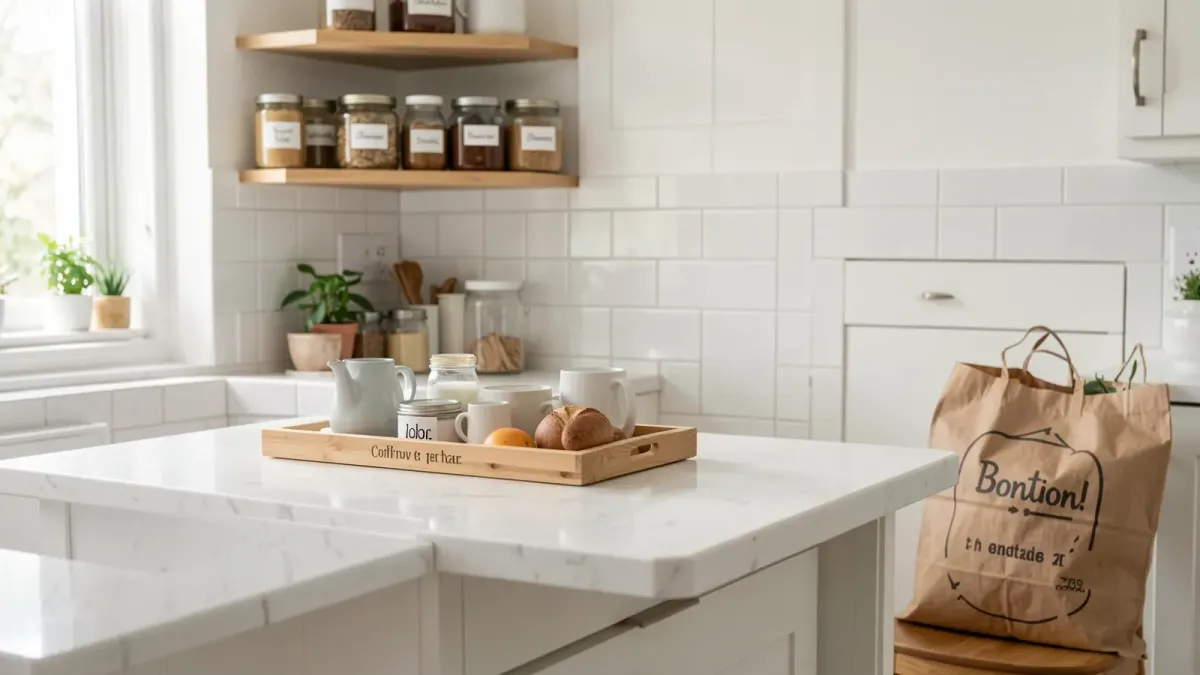
Home organization ideas get out of hand when they start with a shopping list. A weekend works better when it starts with one surface you already walk past: a catch-all chair, a kitchen counter, a hallway hook that has become a wardrobe. Clear that surface, give every object a name and a place, and stop. Tomorrow's you can do a drawer.
In our family, the ideas that lasted were boring. A bowl for keys. A hook at child height for bags. A lid-on box for the cables we were not ready to throw away. The ideas that did not last involved a complicated system we had seen on a home organization show, a new set of matching boxes, and a Sunday evening in which no one could remember the system.
This is not a catalog of products, and it is not a moral judgment about clutter. It is a practical way to start, with a few official reminders about moisture, chemicals, and indoor air, because "organizing" sometimes means moving bleach under the sink or boxing up a damp basement.
A table of starting points, room by room
Pick one row this weekend. Leave the rest on the page.
| Place | A first, small project | A habit that keeps it from returning | What not to do in the same hour |
|---|---|---|---|
| Entry | A hook or a single chair that is allowed to hold today's bag, plus a bowl for keys | Empty the bowl on laundry day; hang the bag when you come in | Building an entire mudroom out of new furniture |
| Kitchen counter | One tray for the daily few objects that actually belong there; the rest go back to drawers | A ten-minute evening reset of that tray only | Buying a packed set of canisters before you know what you cook |
| Fridge and food | Eat or freeze what is already open; group like with like | A quick look before shopping, so you do not double the same jar | A decorative overhaul that ignores dates on leftovers |
| Clothes | One closet rod or one drawer; empty, wipe, return only what you wear in this season | A bag for pieces that need a decision later, dated, so it is not a second closet | A color-coded wardrobe system you will not maintain |
| Papers | One upright folder or a single tray for this month's papers | Open mail over a recycle bin; file or toss the same day if you can | A complete archive of every manual in one tired evening |
| Cleaning products | All bottles in one stable, child-resistant place, labels out, lids closed | Buy only what you use; do not decant into anonymous cups | Mixing products or leaving a mop bucket of chemical air in a closed room |
| Damp corners | Pull items off a basement or bathroom floor so you can see stains | Fix drips; run a fan; do not store cardboard on a wet floor | Boxing things "neatly" over a moisture problem |
EPA indoor-air guidance is plain on a few of these points: keep areas clean and dry, clean up moisture problems rather than hiding them, close product containers tightly, and ventilate when you use products that can release pollutants. Official pages include EPA's Care for Your Air guide and its broader advice on protecting indoor air in your home. Organization that traps damp clothes or open chemical bottles is only a prettier problem.
Secondary search phrases around this topic include home organization tips, printables, magazines, books, and shows. A one-page list you write yourself will beat a printed chart you ignore. If a book or a show helps you start, take the first habit and leave the rest of the branding on the screen.
A weekend checklist that actually fits a weekend
- You have chosen one surface or one drawer, not the whole house
- You have a bag or box for donations, a bag for trash, and a "decide later" box with a date on it
- Cleaning products will stay in original or clearly labeled containers, closed, and up or locked if children or pets can reach them
- Damp or musty items get dry air and light, not a sealed plastic home, until they are actually dry
- You will ventilate if you use a strong cleaner
- You will put hooks, bowls, or boxes in only after you know what needs a home
- Someone else in the household knows the new place for keys, scissors, or the tape, or the system will last one day
- You will stop at a previously agreed time, even if the closet is not a magazine photograph
If the "decide later" box is still unopened in a month, that is a decision too. Open it on the dated day, or let those items leave the house.
Categories, printables, and other ideas that can help or distract
Categories are useful when they match the way you already look for things: "glue and tape," "medicine," "cables we use," "cables we probably do not." Categories fail when they are borrowed from a store aisle you do not have. You do not need a "home organization magazine" taxonomy. You need names you will still understand in a hurry.
Printable labels can help a shared household, especially if children are putting things away. They can also become a project that postpones the actual clearing. A strip of masking tape and a marker is a complete labeling system.
Shows are entertainment. If they leave you feeling that your house is a moral failure, they have stopped being useful. Walk back to the one surface.
For deeper storage in garages and sheds, think about moisture and about what should never live there, such as food you care about in a damp corner, or a heater too close to boxed paper. Official fire-safety placement for equipment is a local and manufacturer question; when in doubt, give heat and fuel space, and do not make a heater fight a pile of boxes.
Questions people ask when they want home organization ideas
What are home organization ideas I can finish in two hours?
One drawer, one counter, or one entry surface. Empty it, wipe it, put back only the objects that belong, and give those objects a bowl, hook, or folder. Set a timer if you need to. Two hours is not a house.
Do I need matching bins before I start?
No. Use shoeboxes, a plain tray, or a single shelf you already own. Buy a container only when a group of objects has already proved it needs one, and measure the shelf first.
Are home organization printables worth using?
They are worth it if you will actually fill them in. A simple weekly reset list, written on paper and stuck to a cupboard, can help. A twelve-page binder of unused charts will not. Start with five lines.
How do I keep moisture from ruining a newly organized closet?
Do not pack clothes against a damp wall. Leave a little air, fix the leak or the steam if you can, and do not store cardboard on a wet floor. If you smell mold or see a stain spreading, organizing around it is not the fix; drying and repair are. For health questions about mold, use official EPA guidance and, if needed, a professional, rather than perfume and a new box.